Advancing Investable City Centres: A Collaborative Vision from Scotland’s Cities
May 11, 2026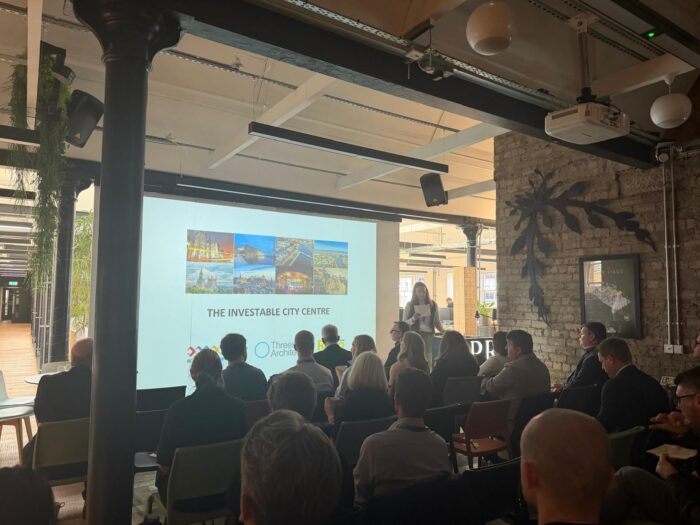
On 21 April 2026, the Scottish Cities Alliance brought together city officers, government partners, delivery agencies and private-sector experts for a focused peer-to-peer workshop in Glasgow. The aim was clear: to explore how Scotland’s city centres can become genuinely investable in a period defined by economic pressure, changing land use and constrained public finances. Hosted by ThreeSixty Architecture at The Garment Factory in Glasgow, and chaired by Alan Anthony (Managing Director, ThreeSixty Architecture and Chair of Revo Scotland, the workshop prioritised open, practical discussion. Rather than presenting polished case studies, contributors shared candid insights into delivery — what is working, what is not, and what needs to change to unlock long-term investment.
Why Investment Matters
City centres remain the civic, cultural and economic anchors of Scotland’s urban system, yet they are under increasing strain. Structural changes in retail, ongoing viability challenges and rising expectations for mixed-use, residential-led places mean that traditional regeneration models are no longer enough. The conversation quickly shifted from how to regenerate to a more fundamental question: how do we create the conditions to attract investment for regeneration in our city centres. Across all sessions, a clear message emerged —investability must be built deliberately through leadership, coordination and long-term commitment
Creating the Conditions for Investment
Session 1: Alan Anthony; Diarmaid Lawlor (Scottish Futures Trust) and Chris Dougray (EDIF).
The opening session focused on the importance of confidence, clarity and coordination. Speakers highlighted that investors are not simply backing individual projects, but the systems behind them. Cities that attract investment tend to demonstrate clear leadership, consistent governance and the ability to manage risk effectively. Crucially, they offer a visible pipeline of opportunities rather than a series of disconnected schemes. There was strong agreement that the public sector must play a proactive role aligning policy, land, infrastructure and funding to create a coherent and credible investment proposition
Delivery in Practice: Scottish Cities
Session 2: Diane Milne (Dundee); David Cooper (Edinburgh); Lucy Alston (Aberdeen) and Paola Pasino (Glasgow)
Case studies from across Scotland showcased how these principles are being applied in practice. Dundee’s railway station has acted as a catalyst for wider regeneration, demonstrating the impact of sustained commitment and proactive delivery. Edinburgh highlighted how combining funding, planning flexibility and partnerships can unlock complex developments where viability is challenging. In Aberdeen, targeted policy flexibility is helping enable city-centre living, while Glasgow’s governance reforms are improving coordination, transparency and confidence in the development pipeline. Together, these examples underline that successful regeneration depends on aligning policy, funding and delivery within a strong strategic framework.
Learning from Elsewhere
Session 3: Jennifer Hartley MBE (Newcastle); Alistair Chapman (Stockport MDC); Sandy Smith (Buccleuch Property)
Insights from Newcastle and Stockport provided valuable lessons on the role of scale, certainty and long-term commitment. Speakers highlighted how devolved powers, development corporations and sustained public investment can help unlock complex sites and attract private capital. From an investor perspective, clarity of governance and consistency of approach remain critical. While Scotland operates within a different system, these underlying principles are highly transferable.
Using the Right Tools
Session 4: Martin McKay (Clyde Gateway); Michael Ross (Turner & Townsend) and Alan Anthony
The final session examined the financial and policy tools available to support investment, including patient capital, lease-based models and evolving approaches to risk-sharing. However, a clear message emerged: tools alone are not enough. Their effectiveness depends on strong delivery foundations- robust financial planning, clear governance structures and a credible pipeline. As highlighted in discussion, long-term regeneration requires institutional capacity as much as funding
A Long-Term Agenda
Closing reflections chaired by Alan Anthony
The workshop concluded with a shared recognition that city centre regeneration is a long-term endeavour. Investable places are those where vision, governance, finance and skills are aligned into a coherent system, with early projects supporting a wider pipeline. There is also an opportunity for Scotland to strengthen its national investment narrative, presenting a clearer and more coordinated proposition while retaining flexibility at the local level. A defining strength of the workshop was its collaborative approach, bringing together perspectives from across the public and private sectors.
The Scottish Cities Alliance continues to provide a vital platform for this exchange supporting cities to share experience, build capacity and strengthen investor confidence. By working together, Scotland’s cities can accelerate delivery and create the resilient, investable city centres needed for the decade ahead.